
통합 검색
통합 검색
- 작성자 hide
- 조회수 99

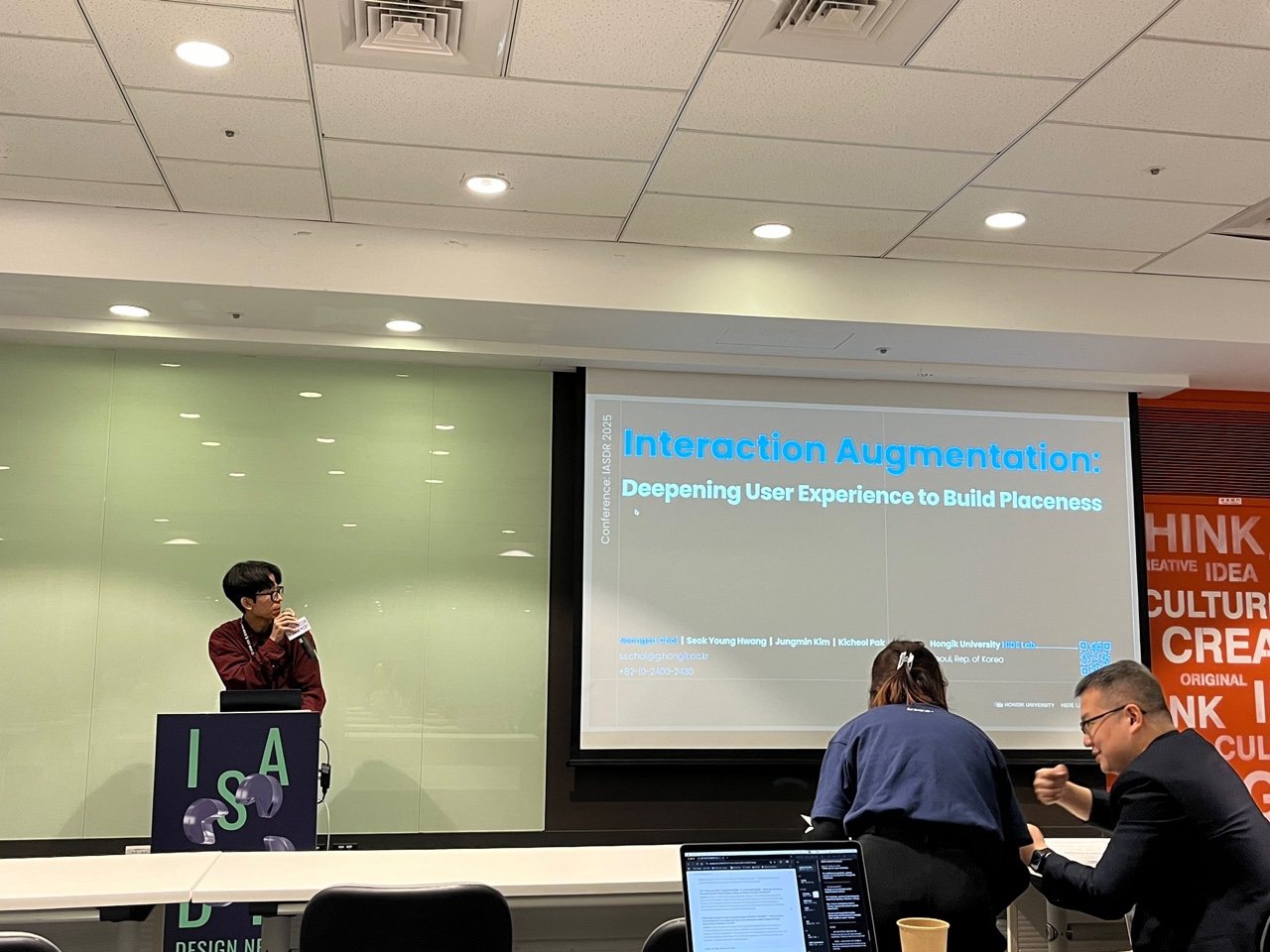
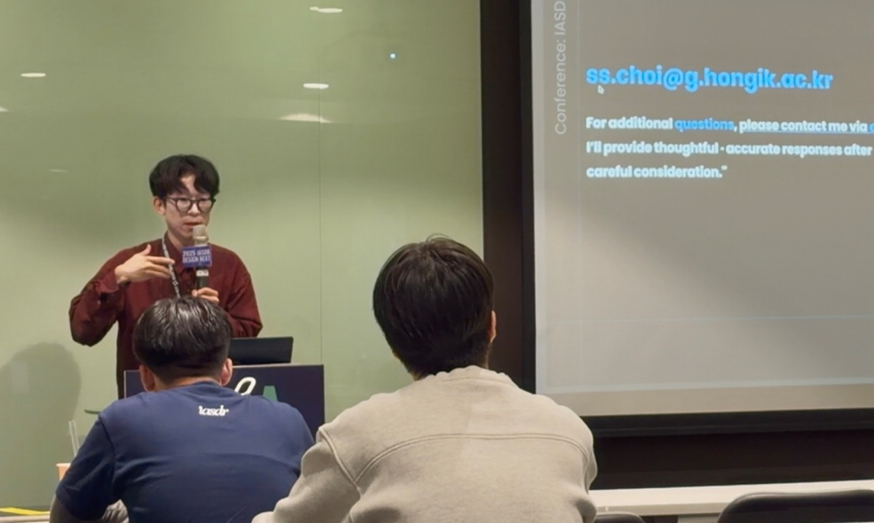
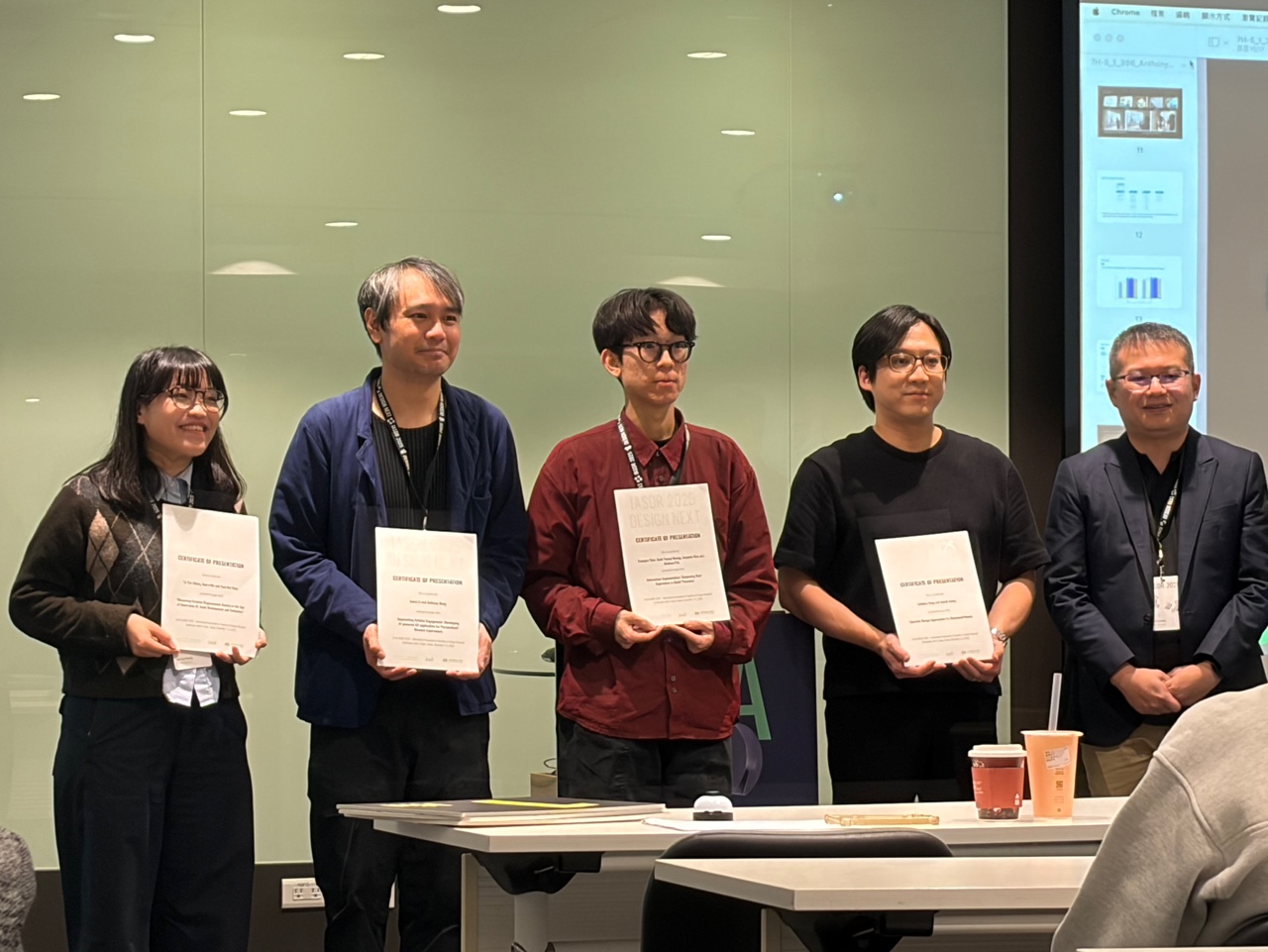
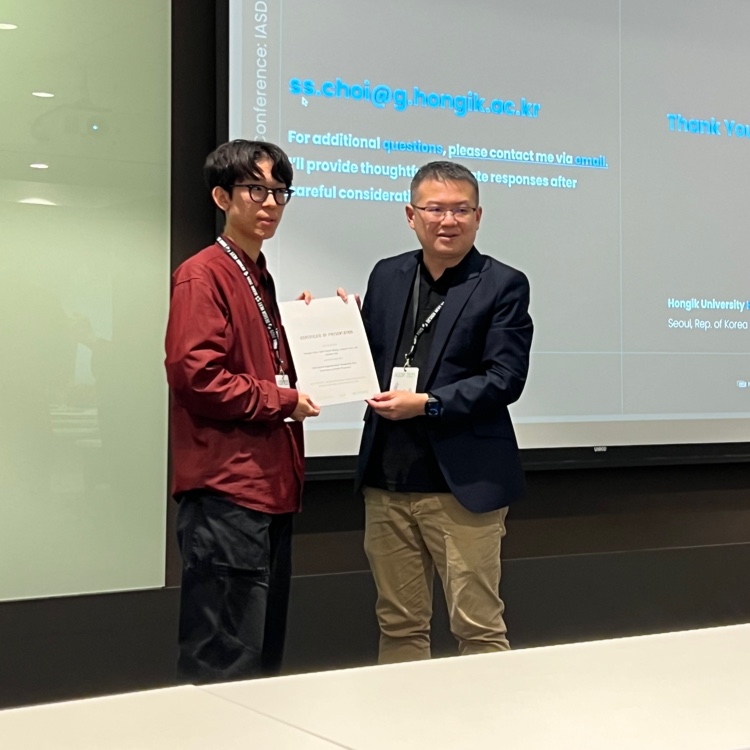
[Interaction Augmentation: Deepening User Experience to Build Placeness, Choi, S., Hwang, S. Y., Kim, J., & Pak, K.]
Reviewed by 최성수 석사연구원
Topic: Interaction Augmentation: Deepening User Experience to Build Placeness
This study aims to investigate how product interaction extends beyond mere functional use to connect with spatial contexts, thereby influencing users’ memories and emotional attachment to particular places. Previous research has highlighted that the relationship between people and places—namely, placeness and place attachment—is closely related to human behavioral intentions. However, the specific pathways through which product interaction expands into place experiences have not been clearly identified. To address this, the study introduces the concept of “Interaction Augmentation” and designs an anthropomorphized interactive lighting product to embody this idea.
The research applied a Research through Design (RtD) approach based on design experiments. A nodding gesture was added to an entryway light, transforming a simple physical reaction into an emotional act of greeting. The lighting product was equipped with sensors to detect user approach, responding with both illumination and a nodding motion. Through this design, functional micro-interactions were expanded into emotional experiences.
An online survey experiment was conducted, in which participants compared videos of a conventional light without movement and an anthropomorphized light with interactive gestures. Evaluation criteria included product characteristics (Organic, Lively, Appealing, Intelligent, Comfortable) as well as place attachment and behavioral intention (memorable space, psychological comfort, spatial attachment, positive word-of-mouth, revisit intention, intention to invite others). Data from 54 respondents were analyzed, showing that the anthropomorphized interaction received significantly higher positive evaluations across most factors. The greatest differences were observed in Lively and Intelligent, while spatial assessments showed notable effects in memorable space and intentions to revisit or recommend the location.
Structural equation modeling further revealed that place attachment serves as a critical mediating factor between product interaction and behavioral intention. Product characteristics strongly influenced place attachment (β = 0.701), which in turn exerted strong effects on behavioral intention (β = 0.905) and product preference (β = 0.621). Among product traits, Appealing and Comfortable were identified as the most influential in fostering place attachment.
Qualitative analysis showed that users felt greater attachment and comfort when the product’s movements were smoother and more refined. Participants also emphasized the importance of harmony between the product’s form, color, and surrounding furniture, suggesting that contextual integration is essential. The installation location was likewise identified as a significant factor in shaping spatial experience. These insights indicate that interaction design should extend beyond technical implementation toward emotionally attuned design strategies that harmonize with spatial environments.
In conclusion, this study empirically demonstrates that augmenting product interactions can expand user experience into spatial memory and emotional meaning. It proposes a new design direction that extends product experience from the personal level to encompass placeness and behavioral intention. In particular, enhancing emotional design attributes such as Appealing and Comfortable emerged as key strategies to strengthen place attachment and encourage behavioral change. This research contributes a new framework linking products, spaces, and user experiences, while leaving open the possibility for future expansion across diverse product types and spatial contexts.
본 연구는 제품의 상호작용이 단순한 사용 경험을 넘어 공간적 맥락과 연결되며, 사용자가 특정 장소에 대한 기억과 정서적 애착을 형성하는 데 어떤 영향을 미치는지 규명하는 것을 목적으로 한다. 기존 연구들은 사람과 장소의 관계, 즉 ‘플레이스니스(placeness)’와 장소애착이 인간의 행동 의도와 밀접하게 관련됨을 강조해왔다. 그러나 제품 상호작용이 어떻게 장소 경험으로 확장되는지에 대한 구체적 경로는 명확히 규명되지 않았다. 이에 본 연구는 ‘인터랙션 증강(Interaction Augmentation)’이라는 개념을 제시하고, 이를 구현하기 위한 의인화된 상호작용 조명 제품을 설계하였다.
연구 방법으로는 디자인 실험 기반의 Research through Design(RtD) 접근을 적용하였다. 현관 진입 시 점등되는 조명에 고개 끄덕임(nodding) 제스처를 추가하여 단순한 물리적 반응을 정서적 환영 행위로 증강시켰다. 조명 제품은 센서를 통해 사용자의 접근을 감지하고 불빛과 함께 고개를 숙이는 동작을 수행하도록 설계되었으며, 이를 통해 기능적 마이크로 인터랙션을 감성적 경험으로 확장하고자 하였다.
실험은 온라인 설문을 통해 진행되었으며, 참가자들은 움직임이 없는 일반 조명과 의인화된 상호작용을 수행하는 조명의 영상을 비교 평가하였다. 평가 항목은 제품 특성(Organic, Lively, Appealing, Intelligent, Comfortable)과 장소애착 및 행동의도(기억성, 심리적 편안함, 공간애착, 긍정적 구전, 재방문 의도, 타인 초대 의도)로 구성되었다. 총 54명의 응답이 수집되었으며, 분석 결과 의인화된 상호작용이 없는 경우보다 대부분의 항목에서 긍정적 평가가 유의미하게 높게 나타났다. 특히 ‘생동감(Lively)’과 ‘지능적(Intelligent)’ 요인에서 큰 차이가 확인되었고, 공간 관련 평가에서는 ‘기억에 남는 공간’과 ‘재방문·추천 의도’ 항목에서 두드러진 효과가 나타났다.
또한 구조방정식 모형 분석 결과, 장소애착이 제품 상호작용과 행동의도 사이에서 핵심 매개 변수로 작동함이 밝혀졌다. 제품 특성은 장소애착에 강한 영향을 주었고(β=0.701), 장소애착은 다시 행동의도(β=0.905)와 제품 선호도(β=0.621)에 강하게 작용하였다. 특히 ‘매력적(Appealing)’과 ‘편안함(Comfortable)’ 요소가 장소애착 형성에 가장 크게 기여하는 것으로 나타났다.
정성적 분석에서는 사용자들이 제품의 동작이 보다 부드럽고 정교해질수록 애착과 편안함이 강화될 것이라고 응답했으며, 제품의 형태·색상 등이 주변 가구와 조화를 이루는 디자인적 배려가 필요하다는 의견도 제시되었다. 설치 위치 또한 공간 경험의 질에 큰 영향을 주는 요인으로 확인되었다. 이는 상호작용 설계가 단순히 기능 구현을 넘어 공간과 조화되는 감성적 디자인 전략으로 확장되어야 함을 시사한다.
결론적으로 본 연구는 제품 상호작용을 증강시킴으로써 사용자 경험이 공간적 기억과 정서적 의미 형성으로 확장될 수 있음을 실증하였다. 이는 제품 경험을 개인적 차원을 넘어 장소성과 행동의도까지 확장시키는 새로운 설계 방향을 제시한다. 특히, 감성적 디자인 요소인 ‘매력적’과 ‘편안함’을 강화하는 것이 장소애착과 행동 변화를 촉진하는 핵심 전략임을 확인하였다. 본 연구는 제품과 공간, 사용자 경험을 연결하는 디자인 연구의 새로운 틀을 제시하며, 향후 다양한 제품군과 공간 맥락으로 확장 가능성을 열어두고 있다.
[DRS Digital Library] Choi, S., Hwang, S. Y., Kim, J., & Pak, K. (2025). Interaction Augmentation: Deepening User Experience to Build Placeness. In Proceedings of IASDR 2025: Design Next, Taipei, Taiwan. To be published in the IASDR 2025 Online Proceedin
[학회 후기]
구두발표가 진행된 타이베이 송산 문화창의공원은 비밀의 숲처럼 조성된 공원과 건물들, 그리고 옛 담배공장을 개조한 건축물이 하나의 공간 안에서 조화롭게 어우러진 장소였습니다. 저는 발표 준비를 위해 오전 8시에 현장에 도착해 발표 장소를 미리 둘러보고, 상쾌한 아침 공기를 마시며 공원을 산책하였습니다. 특히 옛 건물을 관통해 세션장으로 이어지는 공원 거리의 동선 경험이 강하게 인상에 남아, 이곳을 다시 찾고 싶은 장소로 기억되었습니다. 긴장으로 가득했던 마음이 그 공간을 지나며 자연스럽게 풀어졌고, 그 과정 자체가 장소 경험의 힘을 체감하게 해주었습니다. 이 경험을 통해 공간은 개인의 다양한 동기와 맥락에 따라 기억과 경험으로 축적되며, 그 축적이 재방문 의도와 같은 행동 의도의 변화로 이어질 수 있음을 다시 확인하였습니다. 또한 이러한 동기를 유발하는 요인은 대기, 빛, 온도 같은 비물질적 요소일 수도 있고, 사물, 건물, 제품 같은 물질적 요소일 수도 있음을 함께 정리할 수 있었습니다.
[발표 후기]
저의 발표는 이러한 맥락 속에서 제품의 움직임이 장소성 형성에 어떠한 영향을 미치는지를 실증적으로 검증하는 데 초점을 두었습니다. 저는 Design · Art & Technology 분과에서 논문을 발표하였고, 장소성이라는 다소 추상적이고 심리학적인 개념에 대한 이해를 돕기 위해 선행연구에서 제시된 다양한 사례들을 중심으로 장소성의 개념과 구성 요소를 먼저 설명하였습니다. 이후 제품과 사용자의 상호작용이 공간 경험에 어떠한 방식으로 개입하는지를 논의하며, 본 연구에서는 이를 단순한 기능 수행을 넘어서는 개념인 ‘인터랙션의 증강’으로 재정의하였습니다. 이러한 개념 정의를 바탕으로, 제품의 움직임이 사용자의 인지와 감정, 그리고 장소에 대한 인식에 미치는 영향을 검증하기 위한 실험 설계와 프로토타입 디자인 과정을 구체적으로 소개하였습니다. 이를 통해 제품 인터랙션이 장소성 형성의 하나의 유의미한 요인으로 작동할 수 있음을 제시하고자 하였습니다.
질문 1. Why did you choose video-based experiments rather than having participants interact with the actual physical product?
답변 1.It allows us to maintain strict experimental control. For example, across all participants regarding lighting, distance, timing. But, It has a limitations that it cannot capture the actual spatial experience. So we need long field studies observing real behavioral changes over weeks in users' homes.
질문 2. Your RtD process focused heavily on motion design. How might systematic iteration on CMF have changed your results?
답변 2. You're absolutely right, our qualitative findings showed participants were concerned about color compatibility with the furniture in their home. We believe CMF iteration, particularly offering neutral color palettes and different material finishes, could significantly improve the "Comfortable" dimension.
[청취 후기]
주제: Measuring Creative Displacement Anxiety in the Age of Gen AI: Scale Development and Validation
제가 청취한 ‘Measuring Creative Displacement Anxiety in the Age of Gen AI: Scale Development and Validation’는 생성형 AI 확산 속에서 창작자들이 경험하는 불안과 정체성의 흔들림을 정면으로 다룬 연구였습니다. 이 연구는 자신의 창의성이 대체되거나 주변화될 수 있다는 감정적 위기 상태를 ‘Creative Displacement Anxiety’로 명명하고, 이를 정량적으로 측정 가능한 심리 척도로 개발·검증하려는 문제의식에서 출발하고 있었습니다. 기술 수용이나 사용 의도에 초점을 맞춰온 기존 연구들과 달리, 창작 주체의 내면에서 발생하는 정서적 긴장과 위축을 연구의 중심에 두었다는 점이 특히 인상 깊었습니다. 또한 생성형 AI가 빠르고 정교하게 창의적 산출을 만들어내는 환경에서 인간 창작자가 단순히 생산성의 비교 대상이 아니라 ‘창의적 주체로서의 위치’를 재조정해야 하는 상황에 놓여 있다는 문제 제기가 설득력 있게 느껴졌습니다. 이 발표를 통해 앞으로는 AI를 어떻게 활용하고 어디까지 자동화할 것인가의 논의뿐 아니라, 디자이너가 경험하는 불안과 역할 재정의의 부담, 그리고 심리적 수용 상태와 정서적 안정 역시 중요한 설계 변수로 함께 다루어져야 한다는 질문이 자연스럽게 이어졌습니다.
댓글 0